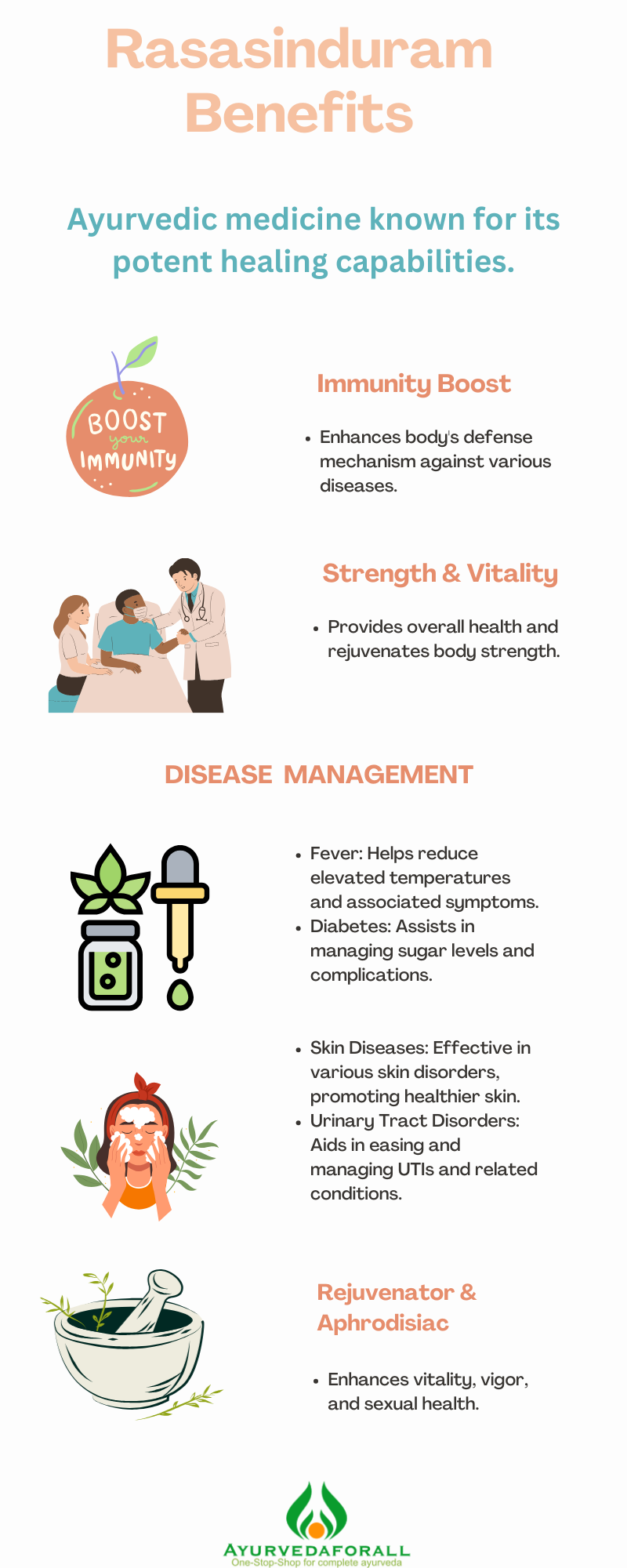
Rasasinduram capsule is an Ayurvedic medicine that provides overall health and immunity and is used in diseases that need emergency management. This tablet or powder contains more mineral ingredients and fewer herbs. This medicine should only be taken as per the direction of a physician.
RAS SINDOOR Benefits
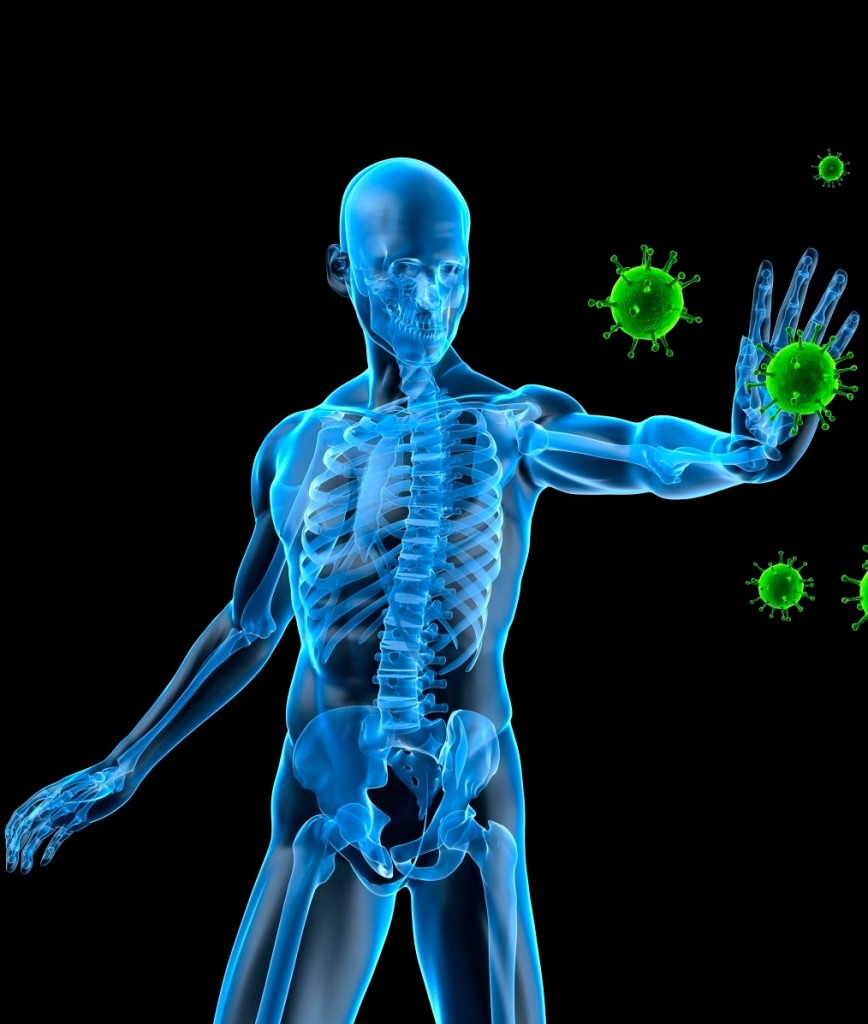
This medicine can be given as an immune booster for many diseases.
It provides body strength and overall health
This medicine is particularly administered for diseases like fever, diabetes, skin diseases, urinary tract disorders, respiratory diseases, non-healing wounds
This medicine is used as a rejuvenator and aphrodisiac medicine.
SL NO	SANSKRIT NAME	       ENGLISH           	QUANTITY	                      ACTION
1	 PARADA                	Purified mercury	   96 gm	        fast relieves from symptoms
2	 GANDHAKA	        Purified sulphur           96gm	                Beneficiary effect on skin diseases, respiratory diseases.
3        VATANKURA	       Ficus benghalensisn     Quantity sufficient for grinding
METHOD OF PREPARATION OF RASASINDOORAM
It is prepared with a special kupipakwa method
96 gm of purified parada and 96 gm of purified gandhaka triturated continuously to get a homogenous black-coloured mixture known as kajjali. This kajjali again grounded with juice of vatankura. This mixture is filled in an amber-coloured glass bottle with a 750 ml capacity. Bottle wrapped with mud-smeared cloth. Then subjected to heat and after cooling red coloured rasasindoora powder was collected.
Detoxification of mercury– Ground with juice of Aloevera, Triphala(Terminalia chebula,Terminalia bellerica,Emblica officinalis),root of chitraka (Plumbago zeylanica) each for 7 days.
Detoxification of Gandhaka – fried in ghee and dipped in cow’s milk repeated 7 times.
DOSHA- DUSHYA PREDOMINANCE AND ROGA MARGA
Dosha – This medicine is recommended for the treatment of all vata- pitta –kapha predominant diseases.
Dushya- useful in diseases affecting all dhatus, especially rasa, rakta, mamsa – fever, skin diseases, chronic wounds, piles and fistula
Roga marga – This medicine can be administered in diseases affecting all roga marga
125 mg once or twice a day after food along with honey or as directed by an Ayurvedic physician.
EXERCISES AND YOGA
Yoga and Pranayama are a set of breathing and stretching exercises respectively, widely practiced in the treatment of many diseases.
Nadi Shuddi Pranayam – Effective in respiratory diseases
The patient needs to be seated in a meditative posture with the head and spine erect, and the body relaxed. The patient has to close one nostril (e.g. left nostril if using the right hand and vice versa) with the thumb and exhale completely through the other nostril. Again, he will have to breathe in deeply through the other nostril while the opposite nostril is still closed with the thumb.
RECOMMENDED DIET AND BEHAVIOUR
Avoid food items that produce dosha imbalance like cold and dry food, hard to digest.
Amruthavrishapatoldi kashayam is an Ayurvedic medicine for a wide array of inflammatory skin diseases. It’s effective in skin care and is the best natural skincare decoction. Herbal Skin Care is getting popular in the present era due to its wholistic approach.
Many skin diseases like pruritus, atopic dermatitis, heat rash, acne etc with redness, swelling and burning sensation get cured with this medicine.
It is beneficial in conditions like inflammation of joints with skin rashes especially redness, swelling and fever. It cures fever associated with Pitta-kapha dominance.
It is beneficial in wounds and skin rashes associated with varicose veins and diabetes.
It is used to treat herpes zoster. It works as a hepato-protective formulation.
It is used to reduce the complications in small pox, chicken pox, measles etc. This combination makes the healing process faster in such diseases. By using this medicine, all types of skin inflammation are reduced.
Indications of Amruthavrishapatoladi kashayam
Vividhavisha – Many types of poisoning
Visarpa – Herpes
Kushtha – All types of skin diseases
Visphota – Pustules and blisters
Kandu – Pruritus
Masoori – Small pox
Seetapitta – urticaria
Jwara -Fever
Ingredients of Amruthavrishapatoladi kashayam
Heart leaved moonseed
Amruta
Tinospora cordifolia (WILLD.) HOOK.F. & THOMS
It is effective anti-ulcer drug in action. It is a well-known anti-oxidant and has significant anti-inflammatory property.
Adathoda, Malabar nut
Vrisha
Justicia adathoda L.
It is an expectorant and is mostly used in respiratory conditions. It helps in treatment of skin diseases. It is also used in jaundice, fevers, headache and urinary infections.
Pointed gourd
Patola
Trichosanthes dioica Roxb.
It has anti-diabetic, hepato-protective, anti-inflammatory, anti-bacterial, anti-fungal, and wound-healing properties. It has anti-oxidants. It is useful in lowering cholesterol and skin diseases. It acts as a laxative.
Coco grass, nut grass, purple nutsredge
Musta
Cyperus rotundus L.
It has marked anti-inflammatory action. It also has anthelmintic, antioxidant and antifungal properties. The drug improves lactation, relieves fever, burning sensation, and excessive thirst. It is also used in treating diarrhoea, dyspepsia and skin diseases.
Indian devil tree/Scholar’s tree/White cheesewood
Saptaparna
Alstonia scholaris.R.Br.
It is a herb with a rare combination of laghu (light) and Snigdha (oily) properties. It has immune-stimulatory, wound-healing, analgesic, anthelmintic, anti-inflammatory, anti-microbial, anti-diarrhoeal, anti-oxidant, hepato-protective, anti-stress and immune-modulatory properties. It is used in the treatment of colic, indigestion, intestinal parasites, chronic & foul ulcers, asthma, and skin diseases including leprosy.
Cutch tree
Khadira
Acacia catechu
It is the best drug for skin diseases. It is widely used to treat acute and chronic skin diseases like eczema, psoriasis, dermatitis, heat rashes etc. It is a blood purifier and is used in bleeding disorders, fever, inflammatory arthritis, diabetic wounds etc.
Common rattan plant
Asitavetra
Calamus rotang
Having potent immunomodulatory activity, it is used in various ailments. Helps to cure piles, burning sensation, cough, leprosy and bleeding disorder. Also, it is used in the treatment of many inflammatory conditions.
Margosa, Neem
Nimbapatra
Azadirachta indica A. JUSS.
The important health benefits of this drug include its ability to treat dandruff, soothe irritation, protect the skin, boost the immune system, and reduce inflammation. It also speeds up wound healing, treats gastric conditions, slows the aging process, improves hair and scalp health, maintains sexual organ health, has anti-cancer potential, and helps treat diabetes.
Turmeric
Haridra
Curcuma longa L.
Turmeric is used to help with heartburn or bowel problems like diarrhoea, intestinal gas, and bloating. It is famous for its anti-cancerous and detoxification effects. It is widely used in skin diseases. Some may use it to help with memory problems or problems with the liver or gallbladder. It may also help to lessen swelling and help with signs of arthritis. It has marked anti-inflammatory and antiseptic action.
Indian barberry/chutro/tree turmeric
Daruharidra
Berberis aristata
It has anti-bacterial, anti-fungal anti-diarrhoeal and anti-cancerous properties. It is used in the treatment of ophthalmic infections.
Details of the manufacturing
Amruthavrishapatoladi kashayam has 10 ingredients. All of them are taken in equal quantity.
All these ingredients should be washed well and dried up in shade.
Take the prescribed herbs in dried & crushed form in an earthen pot. Now add 16 times water into it. Make it boil and then cook in the open vessel with low fire. Reduce the quantity into one by eighth of the initial quantity. Make sure to mix it in between with a wooden spatula. Also, the fire should be kept low to make sure that all the active ingredients in the herbs needed are absorbed well into the water. Once the quantity is reduced to one by eighth of the initial amount of water, remove the vessel from the fire. Squeeze and drain through a clean white cloth. Collect the decoction in a clean vessel and discard the solid waste. Drink the mild warm decoction.
Dosha Dooshya Predominance with roga margas.
Amruthavrishapatoladi kashayam is Pitta-Kaphahara.
It acts on aabhyantara and bahir-rogamargas.
Dosage and Usage of Amruthavrishapatoladi kashayam
Dosage: two Pala.
Usage:
Kashayam is advised to take in empty stomach, once the ingested food is digested well and aahaararasa is formed well.
Usage of kashayam with prescribed prakshepadravyas according to the condition of disease and the patient gives the best results mostly.
Exercises and Yoga.
Amruthavrishapatoladi kashayam is used mainly in skin diseases. Sweating is one of the best ways to cleanse the skin.
While it is used in skin diseases with joint inflammation, vigorous exercises are not allowed in painful conditions. Only stretching, moderate walking, and mild cardio exercises are advised.
Also, specific yogacharya including bhujangaasana, salabhasana, vajrasana is recommended. Range of movement and flexibility must be considered while doing every exercise.
Sookshma sandhi vyayama (warming up small joints) is advised.
Regular exercise helps improve bioavailability of the medicine and food ingested and leads to positive health.
Yoga can maintain harmony within the body and with the surrounding system.
All the exercises and physical exertions must be decided and done under the supervision of a medical expert only.
Recommended diet and behaviour
Diet:
To be avoided
Red chili and other pungent, hot and spicy food items.
Excess intake of salt.
Heavy meals and difficult to digest foods – cause indigestion.
junk foods- cause disturbance in digestion and reduces the bioavailability of the medicine
carbonated drinks – makes the stomach more acidic and disturbed digestion
refrigerated and frozen foods – causes weak and sluggish digestion by weakening Agni (digestive fire)
curd – causes vidaaha and thereby many other diseases
In some persons, intake of milk and milk products cause skin reactions. It is better to avoid that.
To be added
Light meals and easily digestible foods
Green gram, soups, fruits and vegetables.
freshly cooked and warm food processed with cumin seeds, ginger, ajwain etc
Behaviour:
Avoid exposure to excessive sunlight, wind, rain or dust.
Maintain personal hygiene.
Avoid sedentary lifestyle.
Maintain a regular food and sleep schedule.
Avoid holding or forcing the urges like urine, faeces, cough, sneeze etc.
Side effects and contraindications
No known side effects reported.
In persons with a sensitive stomach, it may cause abdominal discomforts and diarrhoea.
Classical references with image of the text.
SAHASRAYOGA VISARPA-VISPHOTA CHIKITHSA SHLOKA 4
Equivalent medicines.
Patolakaturohinyadi kashayam
Nimbamruthadi panchatiktakam kashayam
Brands Available
SNA Oushadahasala
Keraleeya Ayurveda Samajam
Research papers
GUDUCHI
ANTI OXIDANT AND ANTI INFLAMMATORY
The objective of the present work is to study the antioxidant and anti-inflammatory effect of alcoholic and water extracts of T. cordifolia (Willd.) Miers leaves in activated human monocytic THP-1 cells.
cordifolia (Willd.) Miers extracts exhibited significant amounts of total phenolic and flavonoid content, and LC-MS/MS analyses detected tinosponone, a TC-specific clerodane-derived diterpene. Both types of extracts attenuated AA-induced ROS generation via enhancing catalase enzyme activity in THP-1 cells. Real time PCR and ELISA experiments revealed that the elevated levels of LPS-induced TNF-α was remarkably attenuated in THP-1 cells pretreated with T. cordifolia (Willd.) Miers extracts. Western blot and confocal microscopy showed that the alcoholic extract’s anti-inflammatory activity by attenuating NF-κB translocation into the nucleus in LPS-activated THP-1 cells via the inhibition of IκB degradation in the cytosol.
The findings suggest that T. cordifolia (Willd.) Miers dry leaf extracts possess antioxidant and anti-inflammatory properties via upregulation of antioxidant enzymes and attenuation of NF- κB nuclear translocation in activated human monocytic (THP-1) cells.
What is Ankylosing Spondylitis?
Ankylosing spondylitis is typical inflammatory arthritis that involves the spine and the larger joints. AS is otherwise known as Bechterew’s disease. The ratio of AS in Male to female is reported to be 3:1.
What causes AS?
The exact cause of AS is unknown but is believed to be more of the genetic disorder as 90% of the affected individuals show the HLA-B27 genotype. AS can be diagnosed with symptoms, radiological imaging and few blood tests such as ESR, CRP, HLA-B gene testing, etc.
What are the symptoms of AS?
The characteristic symptoms include back pain along with stiffness radiating to the buttock and neck region. Progression of the condition results in ossification which in turn affects the spinal mobility leading to stooped posture due to fusion of the spinal bones along with other systemic features such as fatigue, weight loss, fever, inflammation. Severe AS also known to affect the lungs, heart, kidneys, and eyes in later stages.
How AS is treated?
There is no complete cure for AS in Morden medicine but the symptomatic improvement can be done using anti-inflammatory drugs, anti-rheumatic drugs, immunosuppressants, steroids which preferably reduce pain, stiffness, and inflammation but does not give satisfactory results.
Surgery(Artificial joint replacement) is advised in very advanced stages of AS.
Management in Ayurveda
Ayurveda is believed to play a great role in improving the condition of Ankylosing Spondylitis by alleviating symptoms and reducing the severity to great extent.
AS can be considered as a vata vyadhi where vata dosha gets vitiated affecting asthi majja dhatu. Therefore, AS can be treated with asthi-majja gata vata vyadhi line of treatment which includes a combination of internal medications and external therapeutic procedures which detoxifies by eliminating out the toxins from the body
The therapeutic procedures include Snehana (Oleation) and Svedana (Sudation) followed by Basti (Medicated Enema) and few other procedures like Patra Pinda Sveda, Shastika Shali Pinda Sveda, Dhanyamla Dhara etc.
The commonly used medicines to manage Ankylosing Spondylitis
Amruthotharam Qwath
Dasamulakaduthryadi Qwath
Maharasnadi Qwath
Rasnadi Qwath
Dasamulam Qwath
Kokilaksham Qwath
Sahacharadi Qwath
Gulguluthiktakam Qwath
Punarnavadi Qwath
Rasnasaptakam Qwath
Rasnapanchakam Qwath
Vidaryadi Qwath
Vettumaran Gulika
Kaisore Guggulu
Yogaraja Guggulu
Sooryaprabha Gulika
Lakshmivilas Ras
Rasraja Ras
Yogendra Ras
Vrihatvata Chintamani Ras
Balarishtam
Dhanwantharishtam
Aswagandharishtam
Punarnavasavam
Dhanwantharam Tailam
Ksheerabala Tailam
Narayana Tailam
Rasnadi Tailam
Karpooradi Tailam
Saindhavadi Tailam
Strict diet restrictions along with lifestyle changes are also essential along with the treatment
Physical exercises and postural changes are also known to improve the condition to a great extent.
AS may also be improved with certain therapeutic yoga postures along with physiotherapies which helps in mobilizing and aligning the spine and improving other related symptoms. Postures like Balasana, Bhujangasana, Tadasana, Dandasana, Shavasana. The mentioned postures help in stretching the spine which relieves pain. They also claim to improve mental strength.
Early diagnosis and treatment of As gives better results.
Imagine your Christmas vacation or New Year holiday on the snowy streets of Scotland or North-East England tempts you to play with snow and you make snowmen, snow castle and snowballs to play a lot. You enjoy the snowfall, long enough until you end up sneezing.
That is right! Having fun in the snow made you catch cold. You must be regretting your decision of having fun. But you would not need to regret if you have Trishun.
What is Trishun?
Trishun is an Ayurvedic medicine that is available today in the form of tablet. One tablet of Trishun comprises of Sudharshana churna 675 mg, Tribhuvan kirti, Kirata each 25 mg, Godanti bhasma 20 mg, Katkaranja 50 mg.
Trishun contains piper longun (present in Sitopaladi Churna) to enhance immunity.
What can Trishun do?
Trishun can make your immune system so strong that within a short time, you will be ready to have fun in the snow again. It strengthens immunity and fights cold. It can also help you overcome fever.
To avoid cold effectively, take Trishun at the first sign. If the cold is severe, Trishun provides rapid relief. Trishun should be taken with warm water, tea or coffee. It effectively treats cold or fever because it is Antipyretic.
Are there any other benefits of Trishun?
Trishun is Analgesic (pain relieving) and Anti inflammatory. It can also cure your body ache and Headache.
Hence, now you know how helpful Trishun is. No matter whether winter or rains, Trishun can save you from cold, fever and body ache. Hence order Trishun now by clicking the following link.
We use cookies to ensure that we give you the best experience on our website. If you continue to use this site we will assume that you are happy with it.





 Italiano
 English (UK)
 Русский
 Deutsch
 Français
 Türkçe
 Español