
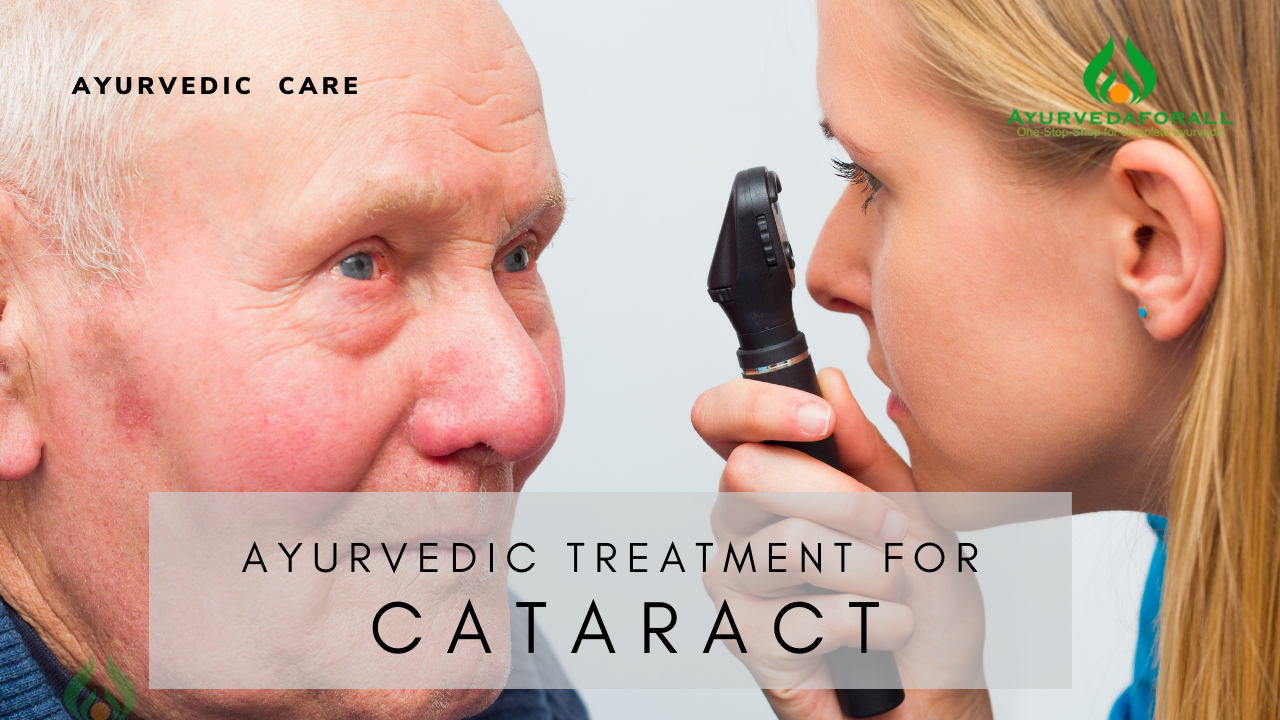

Ayurvedic Treatment for Cataract includes prophylaxis, medical management and surgical management. Cataract is an ocular disorder characterized by clouding of the lens of the eye, leads to blurred vision.
- SIGNS AND SYMPTOMS OF CATARACT
- CAUSES OF CATARACT
- PATHOPHYSIOLOGY OF CATARACT
- DIAGNOSIS OF CATARACT
- TREATMENTS FOR CATARACT
- PROGNOSIS OF CATARACT
- COMPLICATIONS OF CATARACT
- CATARACT AND AYURVEDA
- NIDANA- AYURVEDIC CAUSES OF CATARACT
- PURVAROOPAM- AYURVEDIC PREMONITORY SYMPTOMS OF CATARACT
- SAMPRAPTI – AYURVEDIC PATHOGENESIS OF CATARACT
- LAKSHANA- AYURVEDIC SIGNS AND SYMPTOMS OF CATARACT
- AYURVEDIC PROGNOSIS OF CATARACT
- CHIKITSA- AYURVEDIC TREATMENT FOR CATARACT
- AYURVEDIC LOCAL TREATMENT FOR CATARACT
- AYURVEDIC SAMANA TREATMENT FOR CATARACT
- AYURVEDIC SODHANA TREATMENT FOR CATARACT
- COMMONLY USED AYURVEDIC MEDICINES FOR CATARACT
- HOME REMEDIES FOR CATARACT
- DIET AND BEHAVIOUR FOR CATARACT
- YOGA FOR CATARACT
- RESEARCH PAPERS OF AYURVEDIC MANAGEMENT OF CATARACT
SIGNS AND SYMPTOMS OF CATARACT
- Clouded and blurred vision
- Sensitivity to light
- Inability to see in dim light
- Reading possible only in bright light
- Seeing “halos” around lights
CAUSES OF CATARACT
- Congenital factors like abnormal galactose metabolism
- Old age
- Certains médicaments
- Blessures traumatiques
- Previous ocular surgeries
- Exposure to ionizing radiations
PATHOPHYSIOLOGY OF CATARACT
- Due to the etiological factors protein present in the lens clumps together leads to opacity in the lens, which causes a reduction in the refractive power of the lens. Gradually the vision diminishes and symptoms of cataract manifested.
DIAGNOSIS OF CATARACT
- Vision test
- Examination of retinal changes
- Slit-lamp examination
TREATMENTS OF CATARACT
- Surgery – clouded lens is replaced with a clear artificial lens
PROGNOSIS OF CATARACT
- Cataract surgery improves the vision
COMPLICATIONS OF CATARACT
- Complete loss of vision
CATARACT AND AYURVEDA
- As per Ayurveda, it can be correlated with ‘kaphaja linganasa’
NIDANA- AYURVEDIC CAUSES OF CATARACT
- Ageing
- Blessures traumatiques
- Exposure to bright light
PURVAROOPAM- AYURVEDIC PREMONITORY SYMPTOMS OF CATARACT
- Blurring of vision
SAMPRAPTI – AYURVEDIC PATHOGENESIS OF CATARACT
Due to the etiological factors timira, kacha and linganasa are manifested in the order. The clinical features of Kaphaja linganasha invading fourth patala (Lens) exactly simulate the picture of mature/hyper mature senile cortical (Cuneiform) cataract, the white and soft cataract.
LAKSHANA – AYURVEDIC SIGNS AND SYMPTOMS OF CATARACT
- Complete obstruction of vision; the patient can only perceive bright light /object.
- The pupillary circle appears to be thick, smooth, and white like a white drop of water (fluid) moving on the lotus leaf.
- The pupil constricts in sun and dilates in dark
- The pupillary circle changes its shape on ocular massage.
AYURVEDIC PROGNOSIS OF CATARACT
- Sastra sadhya vyadhi – curable with surgical intervention
CHIKITSA- AYURVEDIC TREATMENT FOR CATARACT
Ayurvedic local treatment for CATARACT
- Lepana
- Anjana – elaneer kuzhampu
- Seka
AYURVEDIC SAMANA TREATMENT FOR CATARACT
- Internal administration of triphala churna along with honey
- Triphaladi Ghana vati
AYURVEDIC SODHANA TREATMENT FOR CATARACT
- Raktamoksha – blood letting
COMMONLY USED AYURVEDIC MEDICINES TREATMENT FOR CATARACT
Ayurvedic medicines for Internal administration for CATARACT
- Triphala churna
- Triphala Tablets
- Triphaladi Ghana vati
- Jeevanthyadi Ghritham
HOME REMEDIES FOR CATARACT
- Daily intake of Indian gooseberry
DIET AND BEHAVIOUR FOR CATARACT
- Avoid food items which produce dosha imbalance like hot, pungent, salty and dry food, hard to digest. Because dosha imbalance aggravates the symptoms.
- Consommer une alimentation équilibrée
- Avoid exposure to sunlight
- Avoid exposure to dust and smoke
YOGA FOR CATARACT
- Nadi Shuddi Pranayam – calms the mind and gets relief from the eye irritations associated with cataract
Le patient doit être assis dans une position méditative, la tête et la colonne vertébrale droites, le corps détendu. Le patient doit fermer une narine (par exemple la narine gauche s'il utilise la main droite et vice versa) avec le pouce et expirer complètement par l'autre narine. Il devra à nouveau inspirer profondément par l'autre narine tout en continuant à fermer la narine opposée avec le pouce.
Video: https://youtu.be/d324ZzE-uXc
RESEARCH PAPERS OF AYURVEDIC MANAGEMENT OF CATARACT
- Management of Cataract with Ayurveda Treatment Modality; a Comparative Clinical Study
- Clinical study on evaluation of anti-cataract effect of Triphaladi Ghana Vatiet Elaneer Kuzhambu Anjana in Timira (immature cataract)
 Français
  English
  Русский
  Deutsch
  Türkçe
  Italiano
  Español